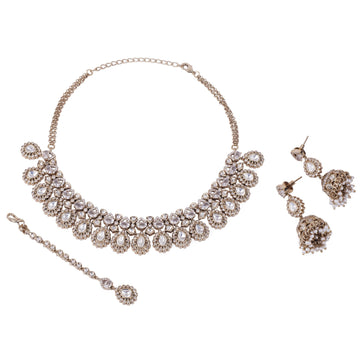
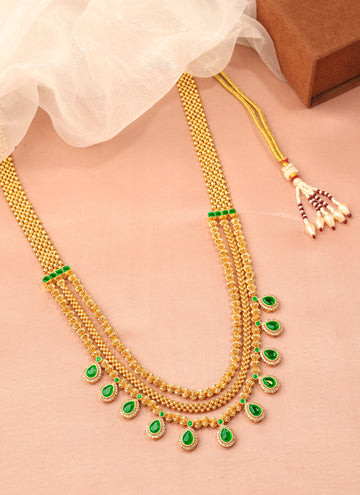
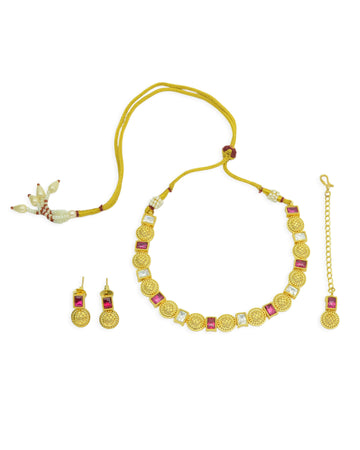
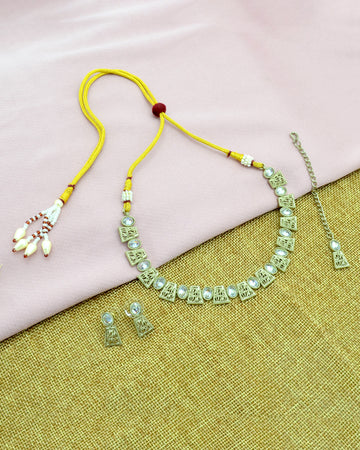
Quick answer: A complete Indian bridal look covers: two necklaces (choker plus haram), jhumka or chandbali earrings with a kaan chain, a maang tikka, bangles or kadas, and a nath or nose ring. Near-essentials are a hathphool, kamarband and rings; payal, bajubandh and mathapatti are optional extras. Plan a lighter set for the reception too. Saloni Fashion Jewellery, Mumbai stocks most of these pieces online, in plated brass rather than solid gold.
Indian bridal jewellery has more named pieces than almost any other tradition, and most checklists online are wishlists dressed up as requirements. This one separates what is genuinely standard from what is optional, so you can plan a complete look without buying things you will wear once and regret.
The essentials
1. Necklace (usually two)
The core of the look. Most brides wear a choker at the base of the neck plus a longer haram or rani haar below it — that layering is what creates the full appearance in wedding photographs. If you are buying one piece only, buy the choker: it sits highest and reads most clearly against a blouse neckline. Our necklace length guide covers choker, haram and rani haar measurements.
2. Earrings
Jhumkas or chandbalis for the ceremony. Look for designs that include a kaan chain, which hooks into the hair and lifts weight off the earlobe. You will be wearing these for eight hours or more, and jhumka weight and back support are the difference between comfortable and miserable.
3. Maang tikka
Sits at the hairline and frames the face. Almost no bridal look skips it. Broad tikkas suit lehengas with open or half-up hair; smaller round tikkas and borla (the round Rajasthani style) work better with sarees and tied hair. Our guide to maang tikka, matha patti and passa covers each style and how to keep it from sliding.
4. Bangles and kadas
Worn stacked on both wrists. The usual arrangement is a broad kundan or polki-style bangle with plainer gold-plated bangles either side. Our guide to kundan vs polki vs American diamond explains the difference. Get sizing right before the day — Indian bangle sizes run 2.4 to 2.10, and there is no fixing it at the last minute. If you are unsure, choose openable kadas.
5. Nath or nose ring
Regional styles differ sharply: Maharashtrian naths are curved and paisley-shaped, Rajasthani and Punjabi versions are large rings often chained to the hair. Clip-on and press-on versions are widely available, so a piercing is not required. Our guide to nose pin vs nose ring vs nath covers the fittings and regional styles.
The near-essentials
6. Hathphool (panja)
The hand harness linking a ring to a bracelet across the back of the hand. Heavily photographed during mehendi and the ceremony because the hands are constantly in frame. Our hathphool guide covers how to wear and store one. Worn on one or both hands.
7. Kamarband (waist belt)
Cinches the saree or lehenga and holds the drape in place. It does a practical job as well as a decorative one — it is what keeps a heavy lehenga sitting correctly through a long day. Our kamarband guide covers sizing, materials and how it compares to a South Indian oddiyanam.
8. Rings
Beyond the engagement ring, many brides wear an aarsi (mirror ring) or a set of statement rings matched to the necklace. Adjustable designs are the practical choice, since hands swell in heat. If a fixed ring is on the list, our ring size guide covers measuring at home before the day.
Optional but worth considering
- Payal (anklets): traditional, particularly with lehengas that show the feet, and usually the most affordable piece on the list.
- Bajubandh (armlet): worn on the upper arm, striking with sleeveless or short-sleeve blouses.
- Mathapatti / passa: the side head-piece worn with or instead of a tikka. Best when hair is styled to one side.
- Hair accessories: juda pins and decorative clips, which matter more than people expect once the veil comes off.
How should I plan the buy?
Buy matched sets where you can. The most common mistake is buying pieces individually and discovering on the day that the metal tones do not agree — one piece is bright gold, another antique gold, and they fight each other in photographs. A necklace set with matching earrings and tikka solves this in one purchase.
Plan for two looks, not one. Most weddings involve a ceremony and a reception, and the same heavy kundan set rarely suits both. A traditional kundan set for the ceremony plus a lighter CZ or pearl set for the reception covers it, with a mangalsutra for everyday wear afterwards.
Weight matters more than you think. Try pieces on and wear them for a few minutes before deciding. Fashion jewellery made in lightweight alloy has a real advantage here over solid metal — you can have the scale of bridal jewellery without the fatigue.
Order early. Bridal stock moves fast through wedding season and specific colours sell out. Six to eight weeks ahead is comfortable; two weeks is not.
Where can I buy bridal jewellery?
Saloni Fashion Jewellery stocks most of these bridal pieces — kundan necklace sets, jhumkas and chandbalis, maang tikka, nath, hathphool, kamarband, bangles and kaan chains — from our showroom at F 80/81/82, Hi Life, Phirozshah Mehta Road, Santacruz (West), Mumbai 400054. Brides and retailers can WhatsApp +91 98705 89560, or browse kundan bridal jewellery sets or bridal necklace sets online.
| Item | Fact |
|---|---|
| Kundan bridal jewellery sets | 144 designs, Rs 369 to Rs 22,949 |
| Necklace sets | 173 designs, Rs 319 to Rs 22,949 |
| Kundan earrings | 100 designs, Rs 249 to Rs 2,159 |
| Kundan maang tikka and passa | 10 designs, Rs 419 to Rs 1,419 |
| Kundan bangles | 23 designs, Rs 529 to Rs 1,579 |
| Shipping | Free across India |
| Dispatch and delivery | Dispatch in 1-2 days; delivery in 4-15 days |
| Returns | Damaged, defective or wrong items reported within 2 days of delivery; Saloni pays return shipping in those cases |
Common bridal jewellery questions
Does a bride need one necklace or two?
Two is standard for the ceremony look: a choker sitting at the base of the neck plus a longer haram or rani haar layered below it, which is what creates the fuller appearance seen in wedding photography. If budget allows only one piece, the choker is the priority since it sits highest and reads most clearly against the blouse neckline. The necklace length guide has the exact measurements for each layer.
Jhumkas or chandbalis — which is more traditional?
Both are traditional bridal earring shapes; jhumkas are bell-shaped and swing, chandbalis are crescent-shaped and sit flatter against the ear, and the choice comes down to face shape and outfit rather than one being more correct. Whichever shape is chosen, look for a design with a kaan chain built in — it hooks into the hair and carries some of the earring's weight for a day that can run eight hours or more.
What is a maang tikka, and does every bride need one?
A maang tikka is the piece that sits at the parting and hangs onto the forehead, and it is close to universal in Indian bridal looks because it frames the face in a way no other piece does. Almost no complete bridal set skips it, though the size and style vary by region and hairstyle — see the head jewellery guide for the full range.
Borla vs maang tikka — which suits which hairstyle?
A standard maang tikka, with its chain running along the parting, suits centre-parted hair worn open or half-up. A borla, the round Rajasthani ball-shaped piece, sits closer to the hairline and works well with hair pulled back or tied, since it does not depend on a visible centre parting the way a chained tikka does.
How many bangles should a bride wear, and what sizes?
The common arrangement is a broad kundan or polki-style bangle or kada on each wrist, flanked by a few plainer gold-plated bangles for fullness. Sizing has to be right before the day, since Indian bangle sizes typically run 2.4 to 2.10 and cannot be adjusted at the last minute; an openable kada removes the sizing risk if there is any doubt.
Does a bride need a nath, or is a nose ring enough?
Neither is strictly required, and a clip-on or press-on version of either works without a piercing, so the choice is regional and personal rather than fixed. Maharashtrian brides typically wear a curved, paisley-shaped nath; Rajasthani and Punjabi styles favour a larger ring, often chained into the hair. The nose jewellery guide covers the fittings for each.
What is a bajubandh, and is it necessary?
A bajubandh is an armlet worn on the upper arm, and it is optional rather than essential — most striking with a sleeveless or short-sleeve blouse, where there is bare arm for it to sit against. It is one of the pieces that photographs well but is easy to skip without the look feeling incomplete.
What is the difference between a mathapatti and a maang tikka?
A maang tikka runs along the centre parting to a single point on the forehead; a mathapatti, or passa, sits at the side of the head, following the hairline above the ear, and is often worn alongside or instead of a tikka when hair is styled to one side. The head jewellery guide explains how the two are combined.
Should a bride buy separate jewellery for the ceremony and the reception?
It is worth planning for two looks rather than one, since the same heavy kundan or polki set rarely suits both events comfortably. A traditional set for the ceremony paired with a lighter CZ or pearl set for the reception covers both, with a mangalsutra taking over for everyday wear afterwards.
Are payal (anklets) part of the standard bridal checklist?
Payal are traditional but optional, and usually the most affordable piece on the list. They matter most with lehengas that show the feet, and a broader ghungroo or stone-set payal is the typical bridal choice over the thin daily-wear chains.
Related: for the evening events, read our guide to jewellery for engagement and reception.