Maang Tikka, Matha Patti, Passa and Borla: Indian Head Jewellery Explained
by Jihaan Savla on Sep 02, 2026

Quick answer: A maang tikka is a single-chain pendant that hooks into the centre parting; a matha patti adds extra chains that fan across the hairline from ear to ear; a passa (or jhoomar) sits off-centre near one temple. All three are fashion pieces in brass or alloy with gold, antique gold or silver plating — not solid gold. Saloni Fashion Jewellery, Mumbai, stocks many of these.
India has more named pieces of head jewellery than most people can keep straight — maang tikka, matha patti, passa, jhoomar, borla, sheeshphool — and shop listings often use the words loosely. This guide sets out what each piece actually is, where it sits on the head, and how to wear it so it stays put through a long function. Browse the range under maang tikka.
What is a maang tikka and where does it sit?
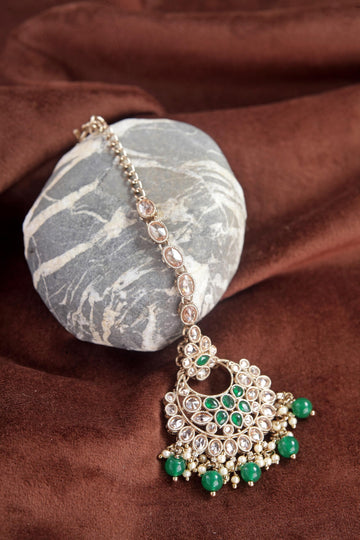
A maang tikka is a pendant on a short chain with a hook at the end. The hook grips the hair at the centre parting — "maang" means the parting and "tikka" the pendant — so the chain runs back along the parting and the pendant rests at the hairline in the middle of the forehead. It is the lightest and most versatile piece of Indian head jewellery, worn for weddings but also for smaller functions, festivals and shoots. A single round or leaf-shaped pendant is the everyday form; broader pendants with layered stonework are the occasion form.
What is the difference between a maang tikka and a matha patti?
A matha patti (also written mathapatti) is a maang tikka with extra chains that fan out across the hairline from the central pendant, hooking into the hair above each ear so the whole forehead line is framed rather than just the centre. Think of the tikka as the single-chain version and the matha patti as the multi-chain version of the same idea. Matha pattis are heavier, sit higher on the head, and are a wedding and sangeet piece rather than something for a small function. They suit an open or half-up hairstyle where the side chains have hair to grip.
What is a passa or jhoomar?
A passa, also called a jhoomar or paasa, is a fan-shaped or dome-shaped ornament worn on one side of the head near the temple, hooked into the hair above the ear. It has Mughal roots and is usually paired with a maang tikka on the opposite side of the parting, or worn alone with hair swept to one side. Because it sits off-centre it needs a firm anchor — a few pins through the hook or a small comb fitting — or it tips forward. The jhoomar name is used more for the chandelier-style fan and passa is the term heard more in Punjabi and Hyderabadi bridal wear, but the piece is the same idea.
What is a borla, and which brides wear it?
A borla is a round, bell- or dome-shaped pendant tikka, traditional to Rajasthani and Marwari brides. Instead of a flat pendant it sits as a decorated sphere at the hairline, often in gold-tone with kundan or meenakari work. It reads as more traditional and regional than a flat tikka and pairs naturally with a Rajasthani poshak or a saree with tied hair. A borla is small and light for its visual impact, which is part of why it has stayed popular.
What is a sheeshphool or shringar patti?
A sheeshphool — literally "flower of the head" — also called a shringar patti or sheesh patti, is the most elaborate piece: a wide decorated band or mesh that covers the parting and much of the crown, often with a tikka pendant at the front and side chains like a matha patti. It is a Rajput and Rajasthani bridal piece, worn for the main ceremony with a heavy poshak, and is not something worn outside a wedding. If you want maximum coverage and are dressing for a single big event, this is the piece; for anything lighter, a tikka or matha patti is more practical.
How do I keep a maang tikka or matha patti from sliding or tipping?
The hook alone rarely holds a decorated piece for a full day. Slide the hook into the hair at the parting, then push two or three bobby pins through the base of the chain where it meets the scalp, crossing them for grip. For a matha patti or passa, pin the side chains into the hair above each ear as well. If the front pendant swings and knocks your forehead, loop a single hair pin through the link just above it, or use a tiny piece of clear double-sided tape on the back of the pendant against the skin. Set your hairstyle first and fit the jewellery into it, not the other way round.
Can I wear head jewellery with no centre parting or short hair?
Yes, with adjustments. Without a centre parting, pin the tikka chain along a side parting or straight back from the hairline and the pendant still sits at the forehead. For short hair or a bun with little grip near the parting, use a piece with a small comb or a clip fitting rather than a bare hook, or anchor the hook to a few pinned-in grips. A passa is actually easier than a central tikka on short or side-styled hair because it only needs one firm anchor point above the ear.
What are fashion maang tikkas and matha pattis made of?
Fashion (imitation) head jewellery is built on a brass or alloy base, plated gold, antique gold, rose gold, silver or rhodium, and set with kundan, American diamond (cubic zirconia), pearls, or coloured glass stones, sometimes with meenakari enamel on the back. The advantage over solid metal for this category is weight: a matha patti or sheeshphool in lightweight alloy gives you the scale without the headache of carrying real gold on your hairline for hours. Care is the same as any plated piece — dry cloth after wear, no water or dip, stored flat and separately, as in our gold-plated jewellery care guide.
How do I match head jewellery to the rest of my bridal set?
Match the metal tone and the stone colour to your necklace and earrings first — a bright gold tikka against an antique gold necklace is the most common mismatch in wedding photos. If your necklace set already includes a tikka, use it; buying separately, take the set with you or match to a clear photo. Scale the head piece to the rest of the look: a heavy kundan choker and statement jhumkas can carry a matha patti or borla, while a lighter reception set is better with a single tikka. See our bridal jewellery checklist for how the whole set fits together, and the nath and nose ring guide for the rest of the face.
Which head jewellery styles should a retailer stock for wedding season?
Lead with single-pendant maang tikkas in gold-tone and antique gold with kundan or American diamond — they sell year-round for functions of every size and reorder steadily. Add matha pattis and borlas as a smaller run for the bridal buyer, weighted toward wedding months rather than held all year. Passa and sheeshphool are slow, high-ticket pieces: carry a few for a full bridal display, not depth. Match head-jewellery stock to the necklace sets you already carry so buyers can put a look together in one visit. Our guide to ordering wholesale jewellery in India covers minimums and first-order sizing, or message us on WhatsApp at +91 98705 89560 for current maang tikka rates and see the wholesale page.
Saloni Fashion Jewellery manufactures and wholesales fashion jewellery from Santacruz West, Mumbai. Browse maang tikka and head jewellery, or message WhatsApp +91 98705 89560 for wholesale rates.