Kundan vs Polki vs American Diamond: What's the Difference?
by Jihaan Savla on Aug 15, 2026

Quick answer: Kundan is a setting technique: flat, uncut stones held by pressed metal without prongs, giving a milky glow — in fashion jewellery, glass or crystal stones on a gold-tone brass or alloy base. Polki uses real uncut diamonds and costs far more; we don't sell polki. American diamond is cubic zirconia, faceted for bright sparkle, suited to parties and daily wear. Saloni Fashion Jewellery, Mumbai stocks kundan-style and American diamond pieces.
Walk into any jewellery shop in Mumbai and you will hear all three words used in the same sentence. Kundan, polki and American diamond are not interchangeable — they are different stones, set in different ways, and they suit different occasions. Here is the plain version.
What is kundan?
Kundan is a setting technique, not a stone. In traditional kundan work, a stone is held in place by thin layers of highly refined, almost pure gold pressed around it — no prongs, no claws. The technique originated in Rajasthan and was refined under Mughal patronage, which is why kundan reads as the most ceremonial of the three, and shares its roots with meenakari enamel work.
The stones used are uncut and flat-backed, with a milky, slightly opaque white appearance rather than sparkle. In fashion jewellery, kundan-style pieces use uncut glass or crystal stones set into a gold-toned brass or alloy base, giving the same flat, layered look at a fraction of the cost.
Best for: brides, wedding ceremonies, and anything where you want the jewellery to look traditional rather than modern.
What is polki?
Polki uses uncut diamonds — stones in their natural form, polished but not faceted. Because the stone is real diamond rather than glass, polki has more depth and a soft internal glow that kundan does not, though it still does not sparkle the way a cut diamond does.
Polki is set in a similar way to kundan, so at a glance the two look alike. The differences show up in cost (real polki is expensive) and in how the stone catches light — polki has a subtle fire, kundan is flatter and milkier.
Best for: heirloom bridal jewellery. In fashion jewellery, “polki-style” describes the look, not the material.
What is American diamond?
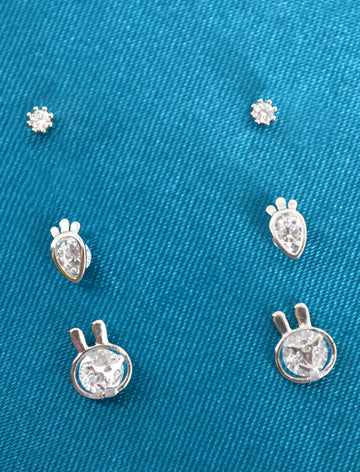
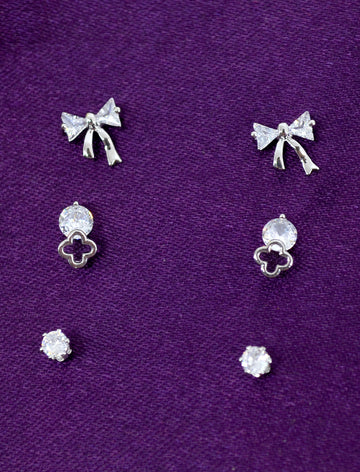
American diamond is cubic zirconia (CZ) — a lab-made stone, cut and faceted exactly like a diamond. It is the brightest and most modern-looking of the three, with sharp, obvious sparkle.
Because CZ is faceted, it reads as contemporary rather than traditional. That is why American diamond dominates party wear, reception jewellery and everyday studs, while kundan dominates the wedding day itself.
Best for: receptions, sangeets, parties, office wear, and anything worn with western or indo-western outfits.
Quick comparison
- Look: Kundan is flat and milky. Polki has soft internal depth. American diamond sparkles brightly.
- Feel: Kundan and polki pieces are usually heavier and broader. CZ pieces are lighter and finer.
- Occasion: Kundan and polki for ceremonies. CZ for receptions and daily wear.
- Cost: Real polki is the most expensive by a wide margin. Kundan-style and CZ fashion jewellery sit at similar, affordable price points.
How to tell them apart in a photograph
Look at the edges of the stones. Kundan stones have irregular, soft outlines and a visible band of metal pressed around them. American diamond stones have sharp geometric edges and sit in prongs or channels. If the stones sparkle in every direction, it is CZ. If they glow rather than sparkle, it is kundan or polki.
Which should you buy?
If you are buying one bridal set, go kundan — it photographs as traditional and works with lehengas and heavy sarees. If you are buying something you will wear repeatedly to parties and functions, go American diamond — it is lighter, brighter and less occasion-locked. Many buyers own both, because they genuinely do different jobs.
At Saloni Fashion Jewellery in Santacruz West, Mumbai, we stock both: kundan bridal necklace sets for wedding wear and American diamond studs and party pieces for everything else. Retailers can WhatsApp +91 98705 89560 for wholesale rates.
Common questions about kundan, polki and American diamond
Is kundan jewellery real gold?
In fine jewellery, the kundan technique itself uses highly refined gold as the foil and setting material, so a real kundan piece carries meaningful gold weight. In fashion jewellery, a kundan-style piece is a brass or alloy base with gold-tone plating and uncut glass or crystal stones set to imitate the traditional foil look; there is no gold content beyond the plating. If a fashion piece is described simply as "kundan", read it as kundan-style, and check the material line for the base metal and plating.
What is the difference between kundan and jadau?
Jadau is the broader craft and kundan is one technique within it. Jadau, from the Persian for "embedding", is the Rajasthani and Mughal-rooted style of setting uncut stones into gold without prongs; a single jadau piece often combines kundan setting on the front, meenakari enamel on the back, and polki or coloured stones as the highlights. So kundan describes how the stone is held, and jadau describes the whole assembled piece.
Why is real polki so much more expensive than kundan?
Polki uses uncut natural diamonds, so the stone cost alone puts it in a different bracket, and each stone is hand-selected and hand-set into refined gold with no two pieces identical. Kundan in fine jewellery uses uncut glass, quartz or lower-value stones in the same gold setting, which is why a kundan set costs a fraction of a polki one that looks similar at arm's length. In fashion jewellery both are imitated with glass or cubic zirconia and sit at similar low price points.
Does kundan jewellery chip or break easily?
The stones can. Because kundan and polki stones are flat-backed and held by a pressed metal rim rather than a claw setting, a hard knock or a drop onto a tiled floor can crack a stone or lift the foil edge, and a lifted foil shows as a dark or cloudy patch. The pieces are also broad and not very flexible, so bending a bangle or a choker to force a fit can pop stones out. Handle kundan gently, put it on and take it off over a soft surface, and get a loose stone re-set rather than glued.
How do I care for and store kundan jewellery?
Keep it completely away from water, perfume, hairspray and lotion, since moisture behind a stone loosens the foil and dulls it permanently. Wipe only the metal with a dry soft cloth, never the stones with liquid. Store each piece flat in its own pouch or box compartment, not stacked, so the raised stonework of one piece does not press on another. A silica gel sachet in the box helps in humid weather. Our gold-plated jewellery care guide covers the plated-metal side.
Can American diamond jewellery be worn every day?
Yes, more comfortably than kundan. Cubic zirconia sits around 8 to 8.5 on the hardness scale, so the stones take daily wear far better than the soft glass used in kundan-style pieces, and CZ studs, small pendants and thin bracelets are common everyday choices. The limiting factor is the plating on the setting, not the stone; a decent rhodium or gold plating on a daily-worn piece still wears at friction points over months, as covered in gold plated vs rhodium vs oxidised silver.
Does American diamond lose its sparkle over time?
It dulls, and most of that cleans off. Skin oil, soap film, hairspray and dust coat the stone and kill the flash; a soft brush with mild soapy water usually brings it back. What does not fully recover is edge wear, since CZ is softer than diamond and years of daily contact slowly round the facet junctions. Occasional-wear pieces stay bright for a long time. The full American diamond, cubic zirconia and moissanite guide covers this in detail.
How can I spot a low-quality or fake polki piece?
For fine jewellery, real polki comes with a certificate and the stones show irregular natural facets and tiny inclusions under a loupe; uniform, perfectly matched "polki" with flat identical backs is glass or CZ. For a fashion piece there is no deception to spot, since it is sold as polki-style, but you can still judge quality: look for even foil colour with no dark lifted edges, stones sitting flush in the metal rim, and a setting that does not rattle when you tap it. Checking imitation jewellery quality before buying covers the rest.
What is kundan meena or kundan-meenakari jewellery?
It is a piece that combines kundan stone-setting on the visible front with meenakari enamel work on the reverse, so it looks finished from both sides. This pairing is traditional in Rajasthani jadau work and is why you will see the back of a good kundan necklace covered in coloured floral enamel rather than left plain. In fashion jewellery, two-side meenakari on a kundan-style piece is a mark of a more carefully made design.
For a retailer, which resells more easily: kundan-style or American diamond?
American diamond has the broader, steadier demand. CZ sets, studs, jhumkas and bracelets sell year-round for office wear, gifting and light bridal use, are lighter to stock and ship, and reorder predictably. Kundan-style pieces are higher-ticket and photograph beautifully, but demand concentrates in wedding season and the pieces are bulky and slower-moving. A general counter is best carrying American diamond as the core reorder line and kundan-style as a seasonal bridal range, as set out in our bridal jewellery checklist.
Related: browse our American diamond jewellery collection or read the American diamond jewellery guide.