Imitation Jewellery vs Real Jewellery: What Is the Difference?
by Jihaan Savla on Oct 07, 2026

Quick answer: Real jewellery is made of precious metal such as gold, silver or platinum, often with natural gemstones, and its price follows the value of that metal and those stones. Imitation jewellery is made of base metal such as brass or alloy with a thin plating and man-made stones, so it gives a similar look at a much lower price but is not a store of value. Choose imitation for weddings, festivals and daily wear, and real jewellery for savings and heirlooms.
Many shoppers ask whether imitation jewellery is simply real jewellery with a cheaper label. It is not: the two are different products made for different purposes, and each does some things better than the other. This guide compares them in plain terms, from metal and stones to weight, care and price logic, so you can decide what to buy for which occasion. The words fashion, artificial and imitation are used loosely in India, and our guide to fashion, imitation and artificial jewellery sorts them out.
What is the difference between imitation jewellery and real jewellery?
Real jewellery is made from precious metals such as gold, silver or platinum, often set with natural gemstones or diamonds. Imitation jewellery is made from base metals, usually brass or alloy, finished with a thin plating and set with man-made stones, so it copies the look of precious jewellery without the precious content.
The practical difference is purpose. Real jewellery keeps some value because the metal and stones are worth something even if the design goes out of fashion. Imitation jewellery does not hold value in the same way. What you pay for is the design, the finish and the wear you get from it, which is exactly why it suits pieces you want for an occasion rather than for an investment.
What are real and imitation jewellery made of?
Real gold jewellery is gold mixed with other metals for strength, commonly sold in 22 carat or 18 carat purity in India. Silver jewellery is often sterling silver, which is 92.5 percent silver. The stones are natural, or sometimes lab-grown, and can be tested and graded by a jeweller.
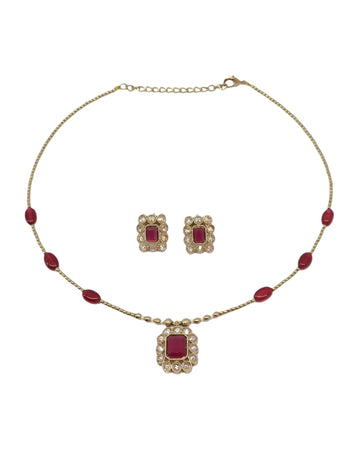
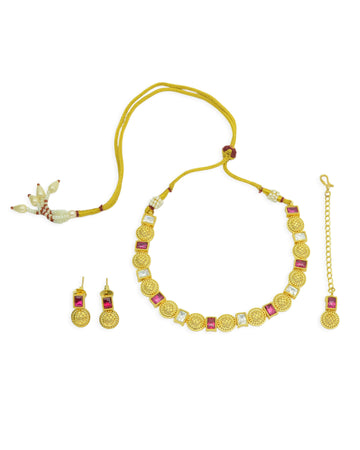
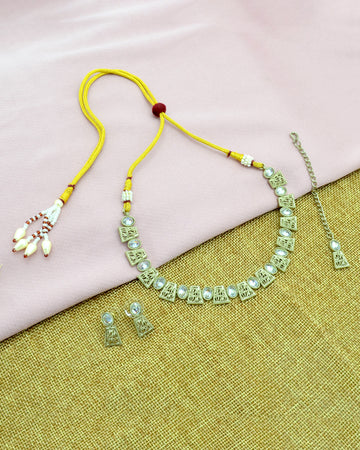
Imitation jewellery starts with a base of brass or a mixed alloy. The surface is plated in a gold, silver, rhodium or antique gold finish, and the stones are usually cubic zirconia, glass, crystal or kundan stones. Pearl-look beads are glass or plastic with a coating. The base metal gives the shape and the plating gives the colour, so the finish is only a thin layer over something that is not precious.
How do imitation and real jewellery look different?
Good imitation jewellery can look very close to the real thing from a distance, especially in photographs and at evening functions. Up close the differences show. Gold has a deeper, softer glow, while plating can look brighter or flatter, and natural stones have small variations that machine-cut glass or cubic zirconia usually lack.
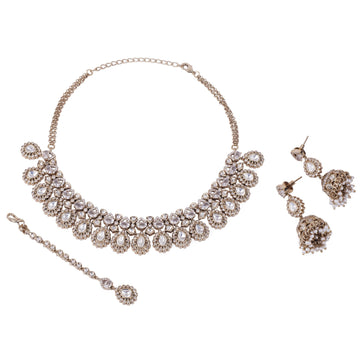
Look is also where imitation has a real advantage. Because the design is not limited by the cost of gold, heavy bridal sets, oversized jhumkas and bold chokers are easy to make in imitation and would be very expensive in real gold. Many shoppers choose imitation precisely to wear a large statement piece without worrying about it.
Is imitation jewellery lighter than real jewellery?
Often it feels lighter for its size, but not always. Brass is a fairly heavy metal, so a sturdy brass piece can weigh a good deal, while hollow or light alloy pieces are made to be easy to wear. Gold is much denser than brass, so a gold piece of the same size and build weighs more, although real jewellery is also made hollow to keep the weight down.
For comfort, weight matters more than material. Heavy earrings pull on the earlobe whatever they are made of. If you wear jewellery all day, start with our lightweight jewellery for daily wear and judge the weight listed for each piece.
Which lasts longer, and how do you care for each?
Real jewellery lasts far longer, because the precious metal runs all the way through the piece instead of sitting in a thin layer. Gold and sterling silver can be polished, repaired and passed down, although silver darkens over time and needs regular cleaning.
Imitation jewellery lasts as long as its plating does, and that depends on how often you wear it and how you keep it. Perfume, sweat, water and rubbing wear plating down over months or a few years, and the base metal can then show through. Put it on last, take it off first, wipe it dry and keep it in a pouch. Our gold-plated jewellery care guide has the full routine.
Why is imitation jewellery so much cheaper than real jewellery?
The price of real jewellery follows the value of the metal and stones, which move with the market, plus making charges. The price of imitation jewellery follows the cost of the base metal, the plating, the stones and the work that goes into the design, and none of those is a precious material.
That is why imitation is priced like a fashion purchase and not like savings. Saloni lists price-band collections by name, such as Jewellery Under Rs 1000, so you can shop by budget. Be careful with any imitation piece sold with big claims about its metal; a very low price with no material mentioned is a signal to ask questions.
When is imitation jewellery the sensible choice?
Imitation is sensible whenever you will wear a piece rarely, or want variety more than value. Weddings are the clearest case. A bridal or guest set worn for a few functions rarely justifies the cost of real gold, and our guide to bridal jewellery on a budget shows how to split the spend between pieces to buy, reuse and skip.
Festival sets for Diwali, Navratri or Karva Chauth, daily-wear earrings you would not mind losing, and trendy pieces you want to try before committing are the other good fits. Imitation also makes sense for travel, when you would rather not carry anything valuable. Real jewellery is the better choice for savings, for gifts meant to be kept for decades, and for pieces you will wear every day for years.
What should you still check before buying imitation jewellery?
Imitation does not mean careless buying. Check that the product page names the material, look at clear photos of the back and the clasp, and ask about the finish and the stones. Good signs are even plating, firmly set stones, smooth edges and a secure hook or screw back. Our guide to checking imitation jewellery quality walks through the full checklist.
Read the seller's return terms before you pay too, because most problems show up only when the piece arrives. Compare weight and size, not just the photo, since a large-looking set in a picture can be small on the ear or neck.
Does Saloni sell imitation jewellery, real jewellery or both?
Most of what Saloni sells is fashion jewellery, meaning imitation pieces in plated brass or alloy, and we describe them as that. Some pieces are genuine sterling silver. The material is listed on each product page, so you can see which one you are buying.
Silver plated pieces have a silver finish over a base metal, which is different from sterling silver, so read the material line and not just the colour. You can browse the silver plated jewellery collection or see all 875+ designs. Delivery is free across India, with dispatch in 1-2 days and delivery in 4-15 days, and you can also visit the showroom in Santacruz West, Mumbai.
Browse bridal jewellery sets for wedding looks, or read what one gram gold jewellery is if you keep seeing that term and want to know what it means.