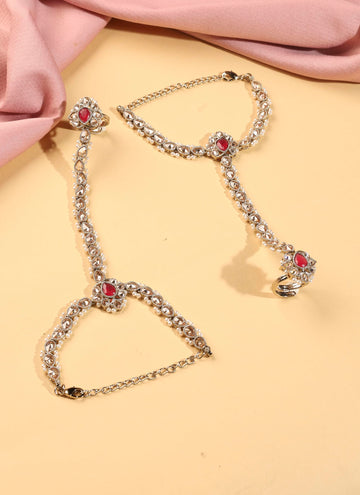
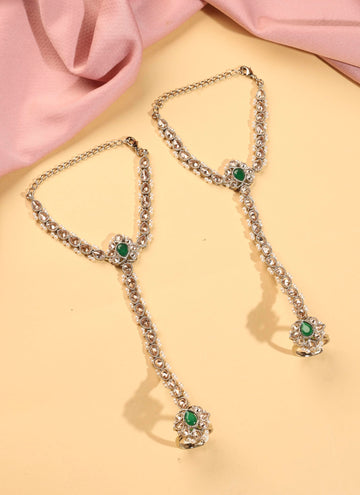
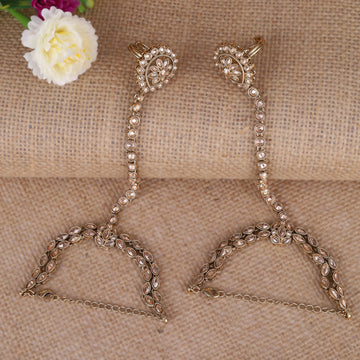
Quick answer: A hathphool is a ring connected by a chain to a bracelet, worn across the back of the hand as one of the most photographed pieces of Indian bridal jewellery, alongside the fuller multi-finger panja style. Fasten the bracelet first, then the ring, and adjust the chain flat with slight slack. Saloni Fashion Jewellery, Mumbai stocks hathphool in kundan, pearl and plain gold-plated finishes.
A hathphool is one of the most photographed pieces in Indian bridal jewellery and one of the least understood before the wedding week — most brides only try one on for the first time days before the ceremony. This guide covers what a hathphool actually is, how it differs from a panja, how to put one on, and how to care for it. Browse the full range under hathphool / hathpaan.
What is a hathphool, and what does the name mean?
"Hathphool" combines the Hindi words for hand ("hath") and flower ("phool"), describing a piece of jewellery that sits across the back of the hand like a flower spreading over it. In its simplest form it is a ring connected to a bracelet by a chain running across the back of the hand, worn so the two pieces move as one. It sits alongside the mehendi as one of the most photographed details of a bridal look, precisely because the hands are constantly in frame during rituals. The style has roots in Mughal-era court jewellery and was later carried into Rajasthani and Gujarati bridal wear before becoming a near-universal North Indian wedding piece.
What is the difference between a hathphool and a panja?
The two names are often used interchangeably, but where a distinction is drawn, a hathphool is the simpler single-ring-and-bracelet style, while a panja is the fuller version, with a central back-of-hand piece and separate chains running out to rings on several fingers — "panja" literally means a hand or a claw-like spread, which describes the shape. Both sit in the same category and are usually sold under whichever name a supplier prefers, so it is worth checking the product photo rather than the name alone.
How do you put on a hathphool correctly?
Fasten the bracelet around the wrist first, then slide the ring onto the finger, and finally adjust the connecting chain so it lies flat with a little slack rather than pulled taut. Putting the ring on before the bracelet is fastened tends to twist the chain. If the piece has multiple finger rings, work from the little finger inward so the chains lay in order rather than crossing over each other.
Which hand should a bride wear a hathphool on?
There is no fixed rule; it comes down to which hand photographs best and which one has the mehendi design the bride wants to show off, since the two are usually paired. Many brides wear it on the dominant hand for rituals where that hand is raised or extended, and some wear a lighter design on both.
Does a hathphool need mehendi underneath, or can it be worn on bare skin?
A hathphool works on bare skin just as well as over mehendi — the pairing with henna is a styling choice for bridal photographs, not a structural requirement. Lighter single-chain hathphool designs are increasingly worn for sangeets, festival dressing and even everyday statement looks with no henna involved at all.
What is a hathphool made of in fashion jewellery?
Fashion hathphool is built on a brass or alloy base with gold-tone, kundan, pearl or meenakari finishes rather than solid precious metal. The kundan-set styles are the most common bridal choice, since they match a kundan necklace set and bangles. The chain length and the number of finger rings vary by design, and the price follows the amount of stonework rather than the metal weight.
How do you store a hathphool so the chains don't tangle?
Unhook the bracelet before removing the ring, not the other way around, and lay the piece flat in its own pouch rather than coiling or dropping it in loose. A hathphool has more moving chains than most jewellery, so it tangles fastest of anything in a bridal set if it is stored carelessly. Our packing and storage guide covers the general method.
Can a hathphool be adjusted for a smaller or larger hand?
Most designs use an adjustable ring and an open-ended bracelet chain, which covers a wide range of hand sizes without exact measurement. Very slim or very broad hands, or a child's hand for a junior bridesmaid, are worth flagging before ordering so an exception can be checked rather than assumed.
Is a hathphool only bridal wear?
No, though that is where it is most associated. Lighter single-chain hathphool designs are worn for sangeets, mehendi functions as a guest rather than the bride, festival dressing, and increasingly as a standalone fashion statement with Indo-western outfits, without any bridal context at all. It also turns up in classical dance costuming, where the hand movements are a visible part of the performance.
What should a new retailer stock first in hathphool?
Lead with simple single-chain gold-plated designs — they sell to a wider, non-bridal audience for sangeets and festivals and carry a lower price point. Add a smaller run of kundan or pearl panja-style pieces ahead of the wedding season, since those are heavier bridal pieces bought once rather than repeat stock. Our wholesale ordering guide covers MOQ and lead times.
Saloni Fashion Jewellery stocks hathphool in kundan, pearl and plain gold-plated finishes at our Santacruz West showroom in Mumbai. Retailers, wholesalers, exporters can WhatsApp +91 98705 89560 for wholesale rates, or see the wholesale page.