Payal and Anklets: A Buyer's Guide to Indian Anklets
by Jihaan Savla on Sep 04, 2026

Quick answer: A payal is an anklet worn as a daily piece or bridal statement; styles range from fine single chains to layered, ghungroo (bell), stone-set, and oxidised designs. Fit loosely with room for a fingertip underneath, sized roughly 9.5-11 inches with an adjustable extender. Saloni Fashion Jewellery, Mumbai stocks payal in silver-plated, gold-plated, oxidised and antique finishes.
Payal — anklets — are one of the few pieces of Indian jewellery worn every single day, by brides and by people who have never given tradition a second thought. The range runs from a chain so fine it is almost invisible to a broad ghungroo pair that announces itself across a room. This guide covers what a payal is, the main styles, how to get the fit right, which payal suits which outfit, and how to keep a plated or oxidised pair looking new. Browse the full range under payal / anklets.
What is a payal, and why is it worn?
A payal is an anklet: a chain worn around the ankle, usually as a pair, and one of the oldest pieces of Indian jewellery still in daily use. In many communities it traditionally marks a married woman, and the soft sound of its bells was meant to announce her arrival in the house. In Rajasthani and Maharashtrian dress it is close to expected bridal wear. Today most buyers wear a thin payal simply as everyday jewellery, married or not, and keep a heavier ghungroo pair for festivals and weddings.
Are payal, anklet, pajeb and nupur the same thing?
They point at the same piece of jewellery with different regional names. "Anklet" is the plain English word; "payal" and "pajeb" are the common North Indian terms; "nupur" is the Sanskrit-rooted word used in classical and devotional contexts, and for the anklets a Bharatanatyam or Kathak dancer wears. "Golusu" in Tamil and Telugu means the same. A "kada payal" is a rigid band rather than a chain. The style differences matter far more than the label: a shopper asking for a pajeb and one asking for an anklet usually want the same chain.
What styles of payal are there?
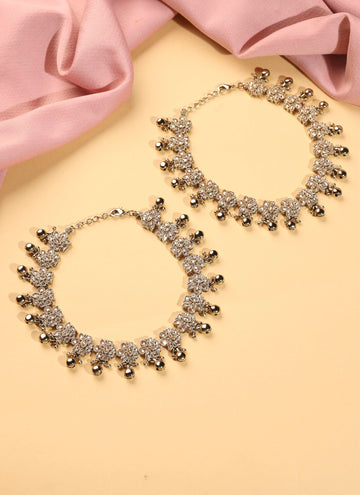
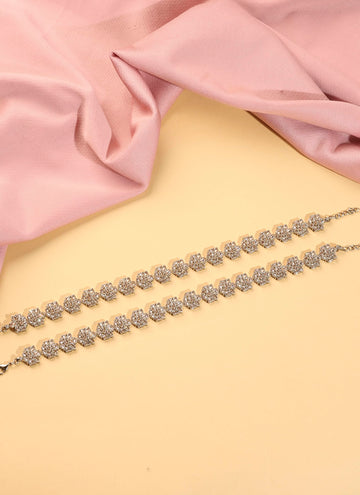
The main families are a fine single chain for daily wear; a layered or multi-strand payal for a fuller look; a ghungroo payal hung with small bells that jingle; a stone payal set with kundan, American diamond or coloured beads for bridal and festive dressing; an oxidised or "tribal" payal in blackened German silver; and a payal-and-toe-ring set where a chain runs from the anklet to a ring on the second toe. Broad "mangal payal" or "bridal payal" pieces are the widest and heaviest, made to be seen under a lehenga.
How should a payal fit, and how do you measure your ankle at home?
A payal should sit loosely on the ankle with enough room to turn it and slip a fingertip underneath: snug enough not to slide over the foot, loose enough to move. To size one, wrap a strip of paper or a tape around the narrowest part of the ankle, just above the bone, mark where it meets, and measure that against a ruler in inches. Most adult anklets run about 9.5 to 11 inches, and the majority of chain payal include an extender chain or a hook that gives two or three inches of adjustment. Rigid kada payal and heavy ghungroo pairs are more often a fixed size, so check the listing.
Which payal suits jeans and western wear, and which suits a saree or lehenga?
A single fine chain, plain or with a few small charms or bells, reads well with jeans, trousers, dresses and Indo-western outfits, worn on one ankle or both. For a saree or a lehenga, a wider payal with more detail holds its own against the fabric: a layered chain, a ghungroo row, or a stone payal that picks up a colour from the outfit. As a rule, the more the payal will be seen, the more weight and width it can carry.
How do you stop a payal from turning the skin black?
A dark or greenish mark under a plated payal is the base metal reacting with sweat and moisture once the plating wears thin at the friction points, not a fault. Keep the payal dry, take it off before bathing, swimming and workouts, and put it on after lotion and perfume have settled. Wiping it after wear and storing it sealed slows the plating loss. Our article on why fashion jewellery turns skin green or black explains the chemistry, and the gold-plated care guide covers the daily routine.
How do you care for and store a ghungroo payal so the bells do not tangle or dull?
Fasten the clasp before putting a ghungroo payal away so the two anklets cannot loop through each other, and lay it flat in its own pouch rather than dropping it into a shared box. Keep it dry: the bells are the first part to dull, and trapped moisture speeds that up, so a silica gel sachet in the box helps in Mumbai humidity. Do not use silver dip on an oxidised payal, as it strips the black finish. Our packing and storage guide has the full method.
Is a silver-plated or oxidised payal actually silver?
Usually not. Most fashion payal are brass or alloy with a silver-tone, gold-tone or rhodium plating, and most "oxidised silver" payal are oxidised German silver, a copper-nickel-zinc alloy with no silver in it. Real sterling silver payal exist, but they are stamped 925 and priced well above fashion jewellery. If a payal is sold cheaply with no hallmark yet called "pure silver", treat it as plated. Our guide to gold-plated, rhodium and oxidised finishes covers how each one wears.
Can you wear a payal with a toe ring, and what is a payal-and-bichhua set?
Yes. A bichhua, also spelled bichiya, is a toe ring traditionally worn by married women on the second toe of both feet, and a "payal set" or "payal-bichhua set" is a matched pair where a fine chain links the anklet to the toe ring so the two move together. These are common bridal pieces, especially in North Indian and Maharashtrian weddings; the bridal jewellery checklist shows where they sit in the full set. For daily wear, most people wear the payal and toe ring as separate pieces.
What should a new retailer stock first in payal?
Lead with fine single-chain payal in silver and gold tone: they sell year-round to the widest range of customers and carry well with western wear. Add a small run of oxidised chain payal for the ethnic-wear buyer, and a few ghungroo and stone payal for the wedding and festival season, weighted toward the autumn and wedding months. Keep bridal payal-bichhua sets to a handful of designs until you see demand. Our wholesale ordering guide covers MOQ and terms.
Saloni Fashion Jewellery stocks payal in silver-plated, gold-plated, oxidised and antique finishes at our Santacruz West showroom in Mumbai, from fine daily chains through to bridal ghungroo pairs. Retailers, wholesalers, exporters can WhatsApp +91 98705 89560 for wholesale rates, or see the wholesale page.