Mangalsutra Designs: Short, Long, Designer and Daily Wear
by Jihaan Savla on Aug 29, 2026

Quick answer: Short mangalsutras (16-18 inches) suit daily wear with a light pendant and secure clasp; long designs (28+ inches) with double-strand black beads suit ceremonies and sarees. Designer mangalsutras use fine chains, minimal beads and American diamond work for a fashion-first look. Saloni Fashion Jewellery, Mumbai stocks many of these styles.
Updated October 2026
The mangalsutra is one of the few jewellery categories in India where the design isn't just aesthetic — length, bead pattern and pendant style all carry regional and personal meaning alongside the styling choice. For a retailer or a buyer, that means the "right" mangalsutra depends on more than what looks good; it depends on what a customer expects it to look like. Browse our range under mangalsutra.
Traditional versus modern designs
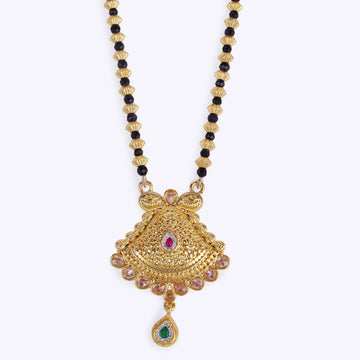
Traditional mangalsutra designs centre on black and gold beads strung in a defined pattern, usually with a gold or gold-toned pendant at the centre — often a vati (cup-shaped) or katori design, sometimes with a coral or ruby-red bead worked in. The emphasis is on the beads and pendant being clearly visible as the identifying feature.
Modern and designer mangalsutras have moved in a different direction — fine chains with the black beads reduced to a small accent near the pendant, sometimes rendered as a single strand rather than the traditional double-strand twist, and pendants that borrow more from contemporary necklace design than from classic mangalsutra shapes. Many modern designs are meant to be worn like everyday jewellery rather than as a visibly distinct ceremonial piece.
What is a short mangalsutra?
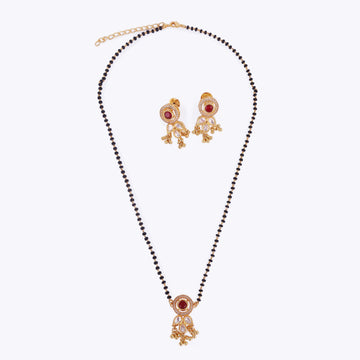
Short mangalsutras, sitting close to the collarbone, have become the most commonly worn daily style over the last decade. They work under most necklines, don't compete with other jewellery, and are practical for regular wear at work or at home. Because the chain is shorter, the bead-to-pendant ratio matters more visually — a short design with too many black beads can look heavy for its length.
What is a long mangalsutra?
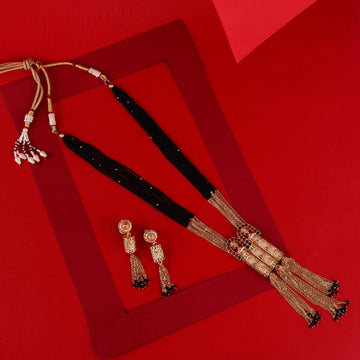
Longer mangalsutras, falling past the chest or to waist length, are more traditional and remain common in many South Indian and Maharashtrian styles, sometimes with two separate strands of black beads rather than one. These are generally reserved for formal or ceremonial wear rather than daily use, both because of the length and because longer traditional designs tend to carry a heavier gold content in appearance, even in imitation pieces. For how mangalsutra length compares with other necklace lengths, see our necklace length guide.
Designer mangalsutra
Designer mangalsutras are built to be worn as fashion pieces first, tradition second. Expect layered chains, diamond-look (American diamond or CZ) work around the pendant, and shapes borrowed from Western pendant necklaces — hearts, ovals, floral motifs — rather than the traditional vati or katori. These sell well to younger buyers and for gifting, particularly where the customer wants something that reads as jewellery in its own right rather than only as a marital symbol.
Black bead patterns and what they signal
The number of strands and how the black beads are arranged varies by region and community, and these differences are often intentional rather than decorative:
- Single-strand black beads with a central pendant is the most widely recognised pattern across North and West India.
- Double-strand (two-line) black beads, often twisted, is closely associated with Maharashtrian tradition, sometimes worn alongside a vati pendant.
- Black and gold bead combinations, alternating rather than solid black, appear in several South Indian styles, sometimes alongside a separate thaali or pendant specific to the community.
- Minimal or single-bead accents near the pendant are typical of modern daily-wear and designer pieces, where the black bead is present as a marker rather than a dominant visual element.
If you're retailing mangalsutras, it's worth stocking at least one design from each major pattern rather than assuming one style covers all customers — this is a category where regional preference genuinely changes what a customer will buy, more than in most other jewellery types.
Choosing for daily wear versus ceremonies
For daily wear, prioritise a shorter length, a lighter pendant, and a secure clasp that can handle being put on and taken off often. Rhodium or gold-plated finishes on a fine chain tend to hold up better under daily contact with skin, water and clothing than heavier antique gold plating, simply because there's less surface detail to wear down.
For ceremonial or festive wear — weddings, karva chauth, first-year anniversaries, family functions — a longer or more detailed design fits the occasion better, and because it's worn occasionally rather than daily, plating durability matters less than visual impact. Choosing one specifically as a Karva Chauth gift? Our jewellery gifting guide covers budget tiers and presentation for occasion gifting like this.
A simple way to guide a customer
Ask two questions before showing designs: how often will this actually be worn, and does the customer come from a family or region with a specific expected pattern (single strand, double strand, or a particular pendant shape)? Those two answers narrow the choice faster than showing the full range and asking what they like.
Care differences worth mentioning
Black beads in imitation mangalsutras are typically glass, onyx-look glass, or coated beads rather than natural stone, so they should be kept away from perfume, hairspray and prolonged water contact just like the plated metal parts. Wiping the piece dry after wear and storing it separately from other jewellery, so the beads don't get scratched by harder pieces, keeps the colour and shine intact for longer. Our fuller guide on how to care for gold-plated jewellery covers the same wipe-and-store routine in more detail.
| Item | Fact |
|---|---|
| Mangalsutra collection | 43 designs, Rs 629 to Rs 3,469 |
| Shipping | Free across India |
| Dispatch and delivery | Dispatch in 1-2 days; delivery in 4-15 days |
| Returns | Damaged, defective or wrong items reported within 2 days of delivery; Saloni pays return shipping in those cases |
Common questions about mangalsutra
What is a mangalsutra and why is it worn?
A mangalsutra is a necklace of black and gold beads with a central pendant, worn by many married Hindu women as a marker of marital status. The black beads are traditionally understood to offer protection, and the piece is tied by the groom during the wedding ceremony. Beyond the symbolism, it now functions as everyday jewellery for most wearers, which is why short, light designs have overtaken long ceremonial ones for daily use.
How long should a mangalsutra be?
There is no single correct length, but the practical ranges are roughly 16 to 18 inches for a short daily-wear chain that sits near the collarbone, 20 to 24 inches for a mid-length piece that clears most necklines, and 28 inches or more for a long traditional or ceremonial design. Most buyers now own a short one for daily wear and keep a longer, heavier design for functions. If you are buying one only, a 20 to 22 inch chain is the most flexible.
Can you wear a mangalsutra every day?
Yes, and most are made for it. For daily wear choose a fine gold-plated or rhodium chain with a small pendant and a strong clasp, since the piece will be put on and taken off constantly. Heavier antique-gold designs with detailed beadwork wear at the plating faster under daily contact with skin, water and clothing. Our guide to gold plated vs rhodium vs oxidised silver explains which finish lasts longest on a daily piece.
What do the black beads on a mangalsutra mean?
The black beads are the defining feature and are traditionally linked to warding off harm from the marriage. How they are arranged carries regional meaning: a single strand is the common North and West Indian pattern, a twisted double strand is closely associated with Maharashtrian style, and alternating black-and-gold bead sequences appear in several South Indian traditions alongside a community-specific pendant or thaali. Modern designs keep just a few black beads near the pendant as a marker rather than a full strand.
Is it acceptable to wear an imitation or fashion mangalsutra?
It is common and widely accepted, especially for daily wear, travel and work, where people prefer not to risk a gold piece. Many women keep a real-gold mangalsutra for ceremonies and wear a fashion version day to day. A fashion mangalsutra is brass or alloy with gold or rhodium plating and glass or onyx-look beads; our explainer on fashion vs imitation vs artificial jewellery covers what those terms cover and how the pieces are described honestly.
What is a vati or katori pendant?
Vati and katori both describe the small cup-shaped or bowl-shaped gold pendant used on traditional mangalsutras, most recognisably in Maharashtrian designs where two vatis are strung on a twisted double strand of black beads. The shape is the traditional identifier of the piece, as opposed to designer mangalsutras that use hearts, ovals, florals or American diamond clusters borrowed from Western pendant necklaces.
Short or long mangalsutra: which should you choose?
Choose by how it will be worn. A short mangalsutra suits daily wear, office use and modern outfits, sits under most necklines, and does not clash with other jewellery. A long mangalsutra suits sarees, ceremonial wear and regional traditions that expect the longer double-strand style. If your family or community follows a specific pattern, that usually settles it; otherwise a short design covers the widest range of use.
How do you stop a mangalsutra chain from turning the skin black?
A dark or green mark under a plated chain is a reaction between skin moisture and the base metal once the plating thins, not a sign of a fault. Keep the chain dry, take it off before bathing, swimming and workouts, and apply perfume and lotion before putting it on. Wiping it after wear and storing it sealed slows the plating loss that causes the mark. Our article on why fashion jewellery turns skin green or black explains the chemistry and the fixes.
Can you wear a mangalsutra with other necklaces?
Yes. A short mangalsutra layers cleanly under a longer chain or a necklace set, keeping the mangalsutra closest to the neck. Keep the metal tone consistent between the pieces if you want them to read as one look. For functions, many wearers move the mangalsutra to the shortest layer of a stack or wear a longer traditional design on its own so it stays visible.
If you sell mangalsutras retail or want to add them to your own store's range, browse our mangalsutra collection covering traditional, short daily-wear and designer styles. For wholesale enquiries, reach us on WhatsApp at +91 98705 89560 or see our wholesale page.