Kaan Chain (Ear Chain): What It Is and How to Wear It
by Jihaan Savla on Sep 03, 2026

Quick answer: A kaan chain (also called ear chain, kaan ki chain or sahara) is a decorative chain that hooks onto your earring and clips into hair above the ear, transferring some of a heavy jhumka's weight off your earlobe. It needs no extra piercing — it attaches to an earring you already have. Saloni Fashion Jewellery, Mumbai, stocks many of these.
A kaan chain is the piece that makes heavy Indian earrings wearable for a full function. It runs from the earring to a point in your hair, so the earring's weight pulls on a hair grip instead of dragging on your earlobe all evening. This guide covers what it is, how to put one on, whether you need extra piercings, how to keep it from slipping, and what a retailer should stock. Browse the range under kaan chains.
What is a kaan chain, and what are its other names?
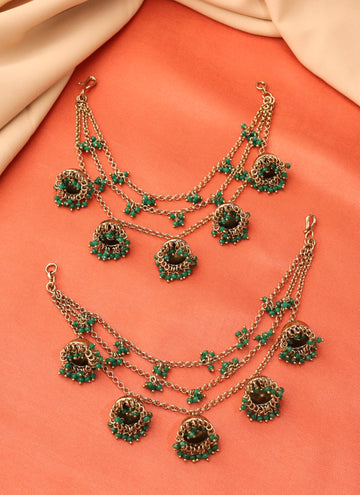
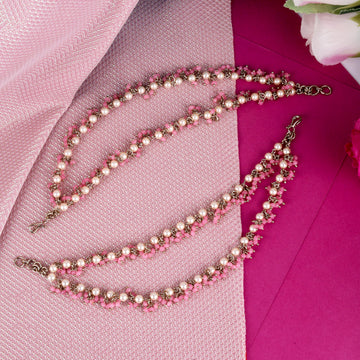
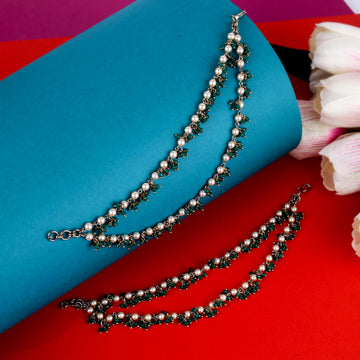
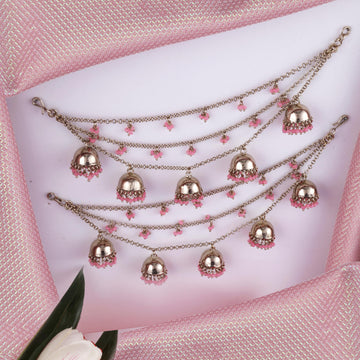
A kaan chain is a decorative chain, usually gold-tone, with a hook or jump ring at one end that attaches to your earring and a clip, comb or pin at the other end that fixes into your hair above the ear. You will also see it sold as an "ear chain", "kaan ki chain", "sahara", "earring chain" or "bahubali chain" after the film look. They all describe the same thing: a support-and-decoration chain between the earring and the hair. Bridal looks use a matched pair, one on each side, often meeting at a central hair accessory or the parting.
Does a kaan chain need a nose or ear piercing?
No extra piercing. The chain does not go through the skin anywhere; it hooks onto an earring you are already wearing and clips into hair. The earring itself uses your existing ear piercing, or you can pair the chain with a clip-on or hoop earring and wear the whole thing with no piercing at all. This is why a kaan chain is an easy way to get the full bridal ear-to-hair look without committing to anything permanent.
How do I attach a kaan chain to my earrings?
Set your hairstyle first, with the hair above each ear pinned back so there is a firm section to clip into. Put your earrings on. Take one kaan chain, open the small hook or jump ring at the earring end, and pass it through a loop, ring or gap on the earring; most jhumkas and chandbalis have a top loop or an outer hoop for exactly this. Close it so it cannot slide off. Then take the clip or comb end, gather a small pinned section of hair above and slightly behind the ear, and fix the clip into it so the chain drapes in a gentle curve rather than pulling straight. Repeat on the other side. The chain should have a little slack, since a taut chain transfers the pull to your hair grip and can tug.
What if my earrings have no loop to hook the chain onto?
Add one. A small jump ring or a split ring, the kind used for keys, opened and closed with pliers, gives the chain hook something to grab on a plain stud or a jhumka with a solid top. A tiny safety pin works as a temporary fix. A loop of strong clear thread tied around the earring post behind the lobe is another option for a one-off. If you buy earrings knowing you will wear a kaan chain, look for pairs that already have a top loop or come with a chain, which many bridal jhumka sets do.
How do I stop a kaan chain from slipping or pulling?
The anchor is everything. Clip the chain into a section of hair that is already held by bobby pins or a grip, not into loose hair, which slides. On fine or freshly washed hair, backcomb the anchor section lightly or add a second grip crossed over the first. Keep the chain length so it swags rather than stretches tight between the ear and the hair. If the earring still feels heavy on the lobe, the chain is not taking enough load; move the hair anchor higher so the chain sits at a steeper angle and carries more of the weight. Check the whole setup by turning your head side to side before you rely on it for hours.
What length of kaan chain should I choose?
Shorter chains sit close to the ear and give a neat, contained look that suits a bun or a sleek hairstyle and a smaller earring. Longer chains swag out toward the parting or a central maang tikka and suit a fuller bridal look with a heavier jhumka. If you are matching to a maang tikka or matha patti, pick a length that lets the chain meet the head piece cleanly rather than crossing over it. Adjustable chains with an extender hook cover a range and are the safer buy if you are unsure of your hairstyle.
Can I wear a kaan chain for daily or festive wear, not just bridal?
Yes. A light single ear chain worn on one side with a stud or a small jhumki is a common festival and party look, and reads as styled rather than heavy. For daily wear it is less practical, since it needs hair pinned back and adds a step to getting ready, but plenty of people wear a delicate ear chain for a specific outfit or a shoot. The bridal use, a matched pair with heavy jhumkas, is where it earns its keep as a support piece rather than only a decorative one.
How do I keep kaan chains from tangling in storage?
Fasten both ends of each chain closed so there are no open hooks to catch, lay the chain flat and straight in its own small pouch or a compartment, and do not coil it tight or drop it loose into a box with other pieces. A pair can be stored together in one pouch if you lay them side by side, not on top of each other. Our guide to packing and storing fashion jewellery covers this for a full set, and the same rules keep a plated chain from rubbing bright at the links.
Does a kaan chain actually reduce the weight on my earlobe?
Yes, when it is anchored properly. The chain creates a second support point in your hair, so instead of the earring hanging entirely from the piercing hole, part of its weight is carried by the hair grip. How much it helps depends on the anchor being firm and the chain sitting at an angle that pulls upward, not sideways. It is the standard fix for heavy kundan and bridal jhumkas over a long function, alongside a wide screw-back and, for a stretched piercing, an earring support disc behind the lobe. Our jhumka styles guide covers the weight problem in more detail.
Which kaan chain styles should a retailer stock?
Stock matched pairs in plain gold-tone and in kundan or pearl to sell alongside bridal jhumka and necklace sets, since most kaan chain sales are add-ons to a bridal earring purchase. Carry a smaller run of light single ear chains for the festival and party buyer. Keep a few adjustable-length designs for customers who do not know their hairstyle yet. Because the piece is light and small, it ships and reorders easily. Our guide to ordering wholesale jewellery in India covers minimums and how to pair it into a bridal set order.
Saloni Fashion Jewellery manufactures and wholesales fashion jewellery from Santacruz West, Mumbai. Browse kaan chains and jhumkis, or message WhatsApp +91 98705 89560 for wholesale rates.