What Is Imitation Jewellery Made Of? Brass, Alloy, Plating and Stones
by Jihaan Savla on Oct 07, 2026

Quick answer: Imitation jewellery is made of a base metal, usually brass or a mixed alloy, covered with a thin plated finish such as gold, silver, rhodium or antique gold, and set with man-made stones like cubic zirconia (American diamond), kundan stones, crystals or glass. Pearl-style pieces use pearl-look beads, which are usually glass or plastic with a coating. The product page should list the material, so read it before you buy.
When a necklace set costs a fraction of a gold one, it helps to know what you are actually paying for. Imitation jewellery is built in layers: a base metal for the shape, a plated surface for the colour, and stones or beads for the sparkle. Each layer has its own strengths and limits, and understanding them makes it easier to judge quality and care for your pieces. This guide goes through the materials one by one in plain language, without the trade jargon.
What is imitation jewellery made of?
Imitation jewellery is made of three things: a base metal, a plated finish on top, and man-made stones or beads set into it. The base is usually brass or an alloy, the finish is a thin layer of gold, silver, rhodium or antique gold colour, and the stones are cubic zirconia, kundan stones, crystals, glass or pearl-look beads.
None of these layers is precious metal or a natural gemstone, which is the reason imitation jewellery costs so much less than real jewellery. Some brands also sell a few genuine sterling silver pieces next to their fashion range, and at Saloni most pieces are plated brass or alloy while some are genuine sterling silver, so the material line on each product page matters.
What base metals are used: brass or alloy?
Brass is a mix of copper and zinc. It is fairly heavy, holds a plated finish well and is easy to shape, so it is common in necklace sets, jhumkas and bangles. A brass piece usually feels sturdy in the hand.
Alloy is a broader word for a mix of metals, often zinc-based, that can be cast into detailed shapes and kept light. Lightweight earrings and large statement pieces are often alloy because it keeps the weight down. Neither is better in every case: brass tends to feel more substantial, and alloy suits big designs that would be uncomfortable if they were heavy.
What do gold plated, silver plated and rhodium plated mean?
Plating is a thin coat of another metal applied over the base. Gold plated jewellery has a gold-coloured layer, silver plated has a silver-coloured layer, and rhodium plating gives a bright, white, mirror-like finish that is often used for American diamond sets. The coat gives the colour, but it is only a surface layer.
Plating thickness is usually measured in microns and it varies by maker, so no single number applies to every piece. A thicker coat generally wears more slowly, but how long any plating lasts depends on how often you wear it and how you care for it. Our guide to gold plated, rhodium and oxidised silver finishes compares them, and you can browse silver plated jewellery to see the finish.
What is an antique gold or oxidised finish?
An antique gold finish is a deliberately aged, darker gold tone, often with deeper shading in the grooves of the design so the pattern stands out. An oxidised finish is a dark grey or black treatment that gives a vintage silver look. Both are finishes applied to the surface, not different metals.
These finishes hide small marks better than a bright polished surface does, which is one reason many shoppers like them for daily wear. They also suit traditional designs, and you can see them across our antique gold jewellery collection.
What stones are used in imitation jewellery?
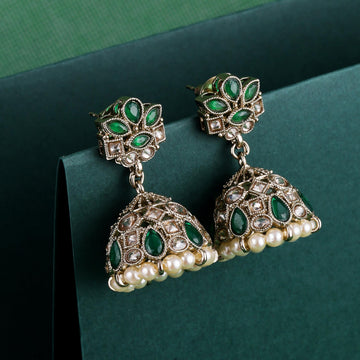
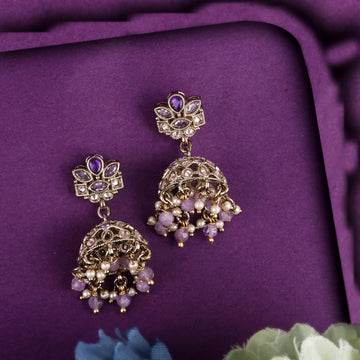
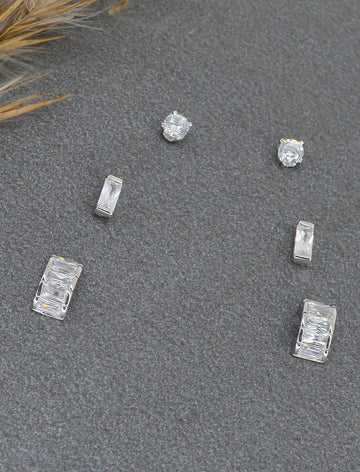
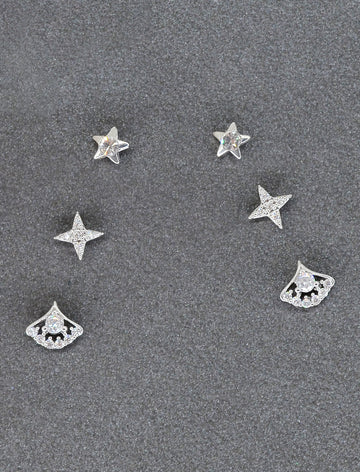
The most common stone is cubic zirconia, a man-made crystal that sparkles like a diamond and is sold in India as American diamond or AD. Other stones include glass, crystal and acrylic. Kundan stones are glass-based stones set in a gold-toned foil or metal frame, which gives kundan sets their rich, layered look.
Colour comes from the glass or the foil behind it, so greens, reds and pinks in imitation sets are tinted rather than natural. Our American diamond jewellery collection shows how cubic zirconia is used, and the artificial kundan jewellery guide explains what goes into a kundan set.
What are pearl beads in fashion jewellery made of?
Natural pearls form inside oysters, and cultured pearls are grown in oysters on farms. Both are expensive and are found mainly in fine jewellery. In fashion jewellery, pearl-style beads are usually glass or plastic with a coating that gives a soft pearl shine, so it is more accurate to call them pearl-look beads than pearls.
Mother of pearl is something different: it is the shimmering inner layer of a shell, and it is used for flat inlay pieces and beads. It is a real shell material, but it is not a pearl. If you like the look, see our pearl sets and moti jewellery, and check the material line for exactly what the beads are.
What are enamel and coloured finishes?
Enamel is a coloured coating that is applied to metal and then dried or fired so it hardens. It is used to add colour to flowers, peacocks and borders in traditional designs. In fashion jewellery you will also find painted and lacquer-style colour finishes that look similar.
Coloured finishes are more delicate than plain metal because a hard knock can chip them. Keep such pieces away from water and perfume, and store them separately so other jewellery does not scratch the colour.
Why do finishes and quality differ between pieces?
Two pieces that look alike in a photo can differ in the base metal, the thickness and evenness of the plating, the quality of the stones and how well they are set. Makers use different processes, and the cost of each choice shows up in price, weight and how long the finish lasts.
That is why it helps to look beyond the picture. Even plating, firm stone settings and clean edges are signs of careful finishing, and our guide to checking imitation jewellery quality shows what to look for.
How do you read the Material line on a product page?
Saloni lists the material on each product page. A material line usually names the base metal, the finish and the stones, for example brass, gold plated, with cubic zirconia stones. Read it as a short recipe: base first, finish second, stones last.
Look for the words brass or alloy to know the base, plated or antique finish to know the surface, and stone names such as cubic zirconia, kundan or glass for the setting. If a line says sterling silver, the piece is genuine silver and not plated. If something is unclear, message us on WhatsApp at +91 98705 89560 before you order.
Browse all our designs to see these materials in real pieces, read how to care for gold-plated jewellery, or see how fashion, imitation and artificial jewellery differ.